
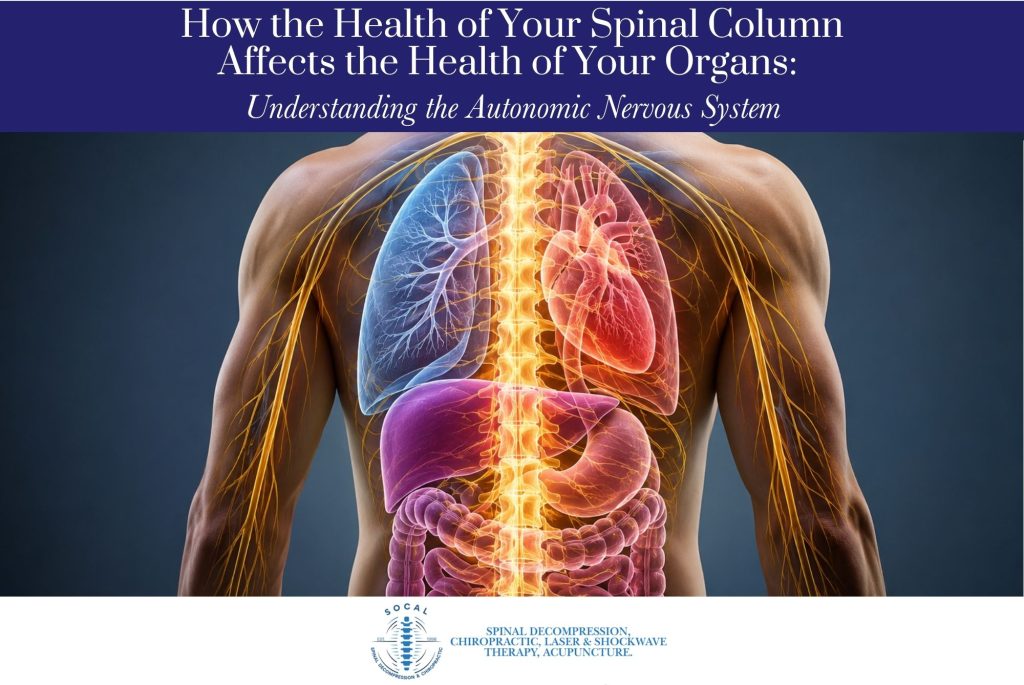
Your spinal column does far more than support your posture or protect your spinal cord. It serves as the primary communication highway between your brain and the rest of your body—including your vital organs. When spinal health is compromised, it can interfere with the nervous system’s ability to regulate essential bodily functions, potentially impacting everything from digestion and breathing to heart function and immune response.
At SoCal Spinal Decompression & Chiropractic, we help patients understand the profound connection between spinal health and overall wellness. By addressing spinal misalignments, nerve interference, and chronic pressure on the spine, chiropractic care and spinal decompression therapy may help restore healthier communication throughout the body.
The Spine: Your Body’s Communication Superhighway
The spinal column houses and protects the spinal cord, a vital component of the central nervous system. Nerves branch out from the spinal cord and travel throughout the body, delivering messages between the brain and organs, muscles, and tissues.
When the spine is healthy and properly aligned, these nerve signals flow efficiently. However, spinal misalignments, disc problems, inflammation, poor posture, injuries, or chronic stress can place pressure on nerves and disrupt communication pathways.
This disruption may contribute to dysfunction in various organs and systems throughout the body.
Understanding the Autonomic Nervous System
One of the most important systems connected to spinal health is the autonomic nervous system (ANS).
The autonomic nervous system controls involuntary bodily functions, including:
- Heart rate
- Blood pressure
- Digestion
- Breathing
- Hormone regulation
- Immune response
- Bladder function
- Temperature regulation
The ANS is divided into two primary branches:
1. Sympathetic Nervous System (“Fight or Flight”)
This system activates during stress or danger and prepares the body for action by:
- Increasing heart rate
- Elevating blood pressure
- Redirecting blood flow
- Releasing stress hormones
2. Parasympathetic Nervous System (“Rest and Digest”)
This system promotes healing, recovery, and relaxation by:
- Slowing heart rate
- Supporting digestion
- Encouraging restorative sleep
- Stimulating immune function
The spinal cord and surrounding nerves play a major role in regulating both branches of the autonomic nervous system.
How Spinal Problems Can Affect Organ Health
When vertebrae become misaligned or spinal discs place pressure on nearby nerves, the communication between the brain and organs may become impaired. This can create dysfunction in the autonomic nervous system and contribute to a variety of health concerns.
Neck (Cervical Spine) Issues
Problems in the cervical spine may affect:
- Headaches and migraines
- Sinus function
- Blood flow to the brain
- Breathing patterns
- Thyroid function
- Jaw pain (TMJ)
Mid-Back (Thoracic Spine) Issues
Thoracic spinal dysfunction may influence:
- Heart function
- Lung capacity
- Digestive organs
- Liver and gallbladder activity
- Stress responses
Lower Back (Lumbar Spine) Issues
Lumbar nerve interference may contribute to:
- Digestive issues
- Bladder dysfunction
- Sciatica
- Pelvic pain
- Reproductive organ discomfort
- Lower extremity weakness or numbness
The Role of Spinal Decompression Therapy
Spinal decompression is a non-surgical therapy designed to relieve pressure on spinal discs and nerves. It gently stretches the spine to create negative pressure within affected discs, which may help:
- Reduce nerve compression
- Improve nutrient flow to discs
- Promote healing
- Decrease inflammation
- Improve mobility
Many patients seek spinal decompression therapy for conditions such as:
- Herniated discs
- Bulging discs
- Degenerative disc disease
- Sciatica
- Chronic neck pain
- Lower back pain
By reducing spinal stress and improving nerve function, decompression therapy may support healthier nervous system communication throughout the body.
Chiropractic Care and Whole-Body Wellness
Chiropractic adjustments focus on restoring proper spinal alignment and improving nervous system function. Since the nervous system controls nearly every organ and tissue in the body, chiropractic care is often viewed as a whole-body wellness approach—not simply pain management.
Potential benefits of chiropractic care may include:
- Reduced pain and inflammation
- Improved posture
- Better mobility
- Enhanced sleep quality
- Improved stress management
- Better nervous system function
- Increased overall wellness
Warning Signs Your Spine May Be Affecting Your Health
Some symptoms that may indicate spinal-related nerve interference include:
- Chronic headaches
- Persistent neck or back pain
- Numbness or tingling
- Digestive discomfort
- Fatigue
- Poor posture
- Reduced mobility
- Muscle weakness
- Frequent tension or stress
If left untreated, spinal problems can worsen over time and potentially affect quality of life and overall health.
Frequently Asked Questions (Q&A)
Can spinal problems really affect internal organs?
Yes. The spine protects the spinal cord, which carries nerve signals between the brain and organs. When nerve communication becomes disrupted due to spinal misalignment or disc compression, organ function may be affected.
What is the autonomic nervous system?
The autonomic nervous system controls automatic body functions such as heart rate, digestion, breathing, blood pressure, and immune responses. It operates without conscious effort.
How does chiropractic care support nervous system health?
Chiropractic adjustments aim to improve spinal alignment and reduce nerve interference, helping the nervous system communicate more effectively with the rest of the body.
What conditions may benefit from spinal decompression therapy?
Spinal decompression therapy is commonly used for:
- Herniated discs
- Bulging discs
- Degenerative disc disease
- Sciatica
- Chronic neck pain
- Chronic lower back pain
Is spinal decompression painful?
Most patients find spinal decompression therapy comfortable and relaxing. The treatment uses gentle, controlled stretching motions.
Can chiropractic care help with stress?
Because chiropractic care may support healthier autonomic nervous system function, many patients report feeling more relaxed and experiencing reduced physical tension after treatment.
How do I know if nerve compression is causing my symptoms?
A comprehensive evaluation, including a physical examination and imaging when necessary, can help determine whether spinal issues may be contributing to your symptoms.
Is chiropractic care safe?
When performed by a licensed and experienced chiropractor, chiropractic care is generally considered safe for many patients. Treatment recommendations are tailored to each individual’s condition and health history.
How long does it take to see results from spinal decompression?
Results vary depending on the condition and severity. Some patients experience improvement after a few sessions, while others may require a more comprehensive treatment plan.
Can poor posture affect organ function?
Yes. Poor posture can place abnormal stress on the spine, compress nerves, reduce lung capacity, impair circulation, and contribute to muscular imbalance and discomfort.
Prioritize Your Spine for Better Whole-Body Health
Your spinal health plays a major role in how your entire body functions. Because the spine and nervous system are closely connected to your organs, maintaining proper spinal alignment may help support overall wellness and improve quality of life.
If you are experiencing chronic pain, nerve-related symptoms, or spinal discomfort, the team at SoCal Spinal Decompression & Chiropractic is here to help.
Contact Information
SoCal Spinal Decompression & Chiropractic
📍 12146 Lakewood Blvd., Downey, CA 90242
📞 (562) 321-5225
🌐 socalbackdoctor.com